June 25, 2025
Longevity in a tablet: grab the future, swallow today
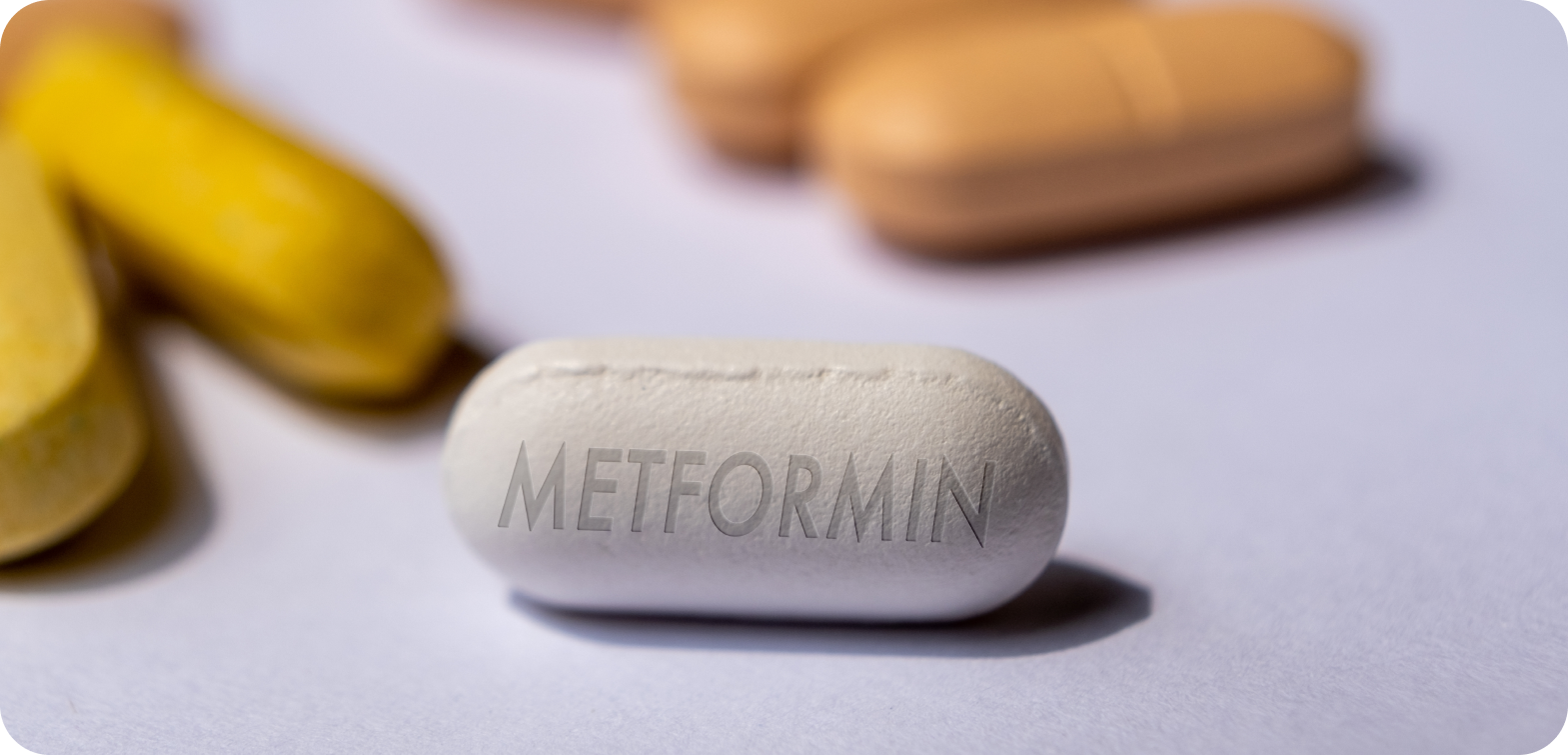
*Medical advice disclaimer to go here…Lorem ipsum dolor sit amet consectetur. Cras nulla ac at penatibus integer tortor dui non. Risus elit et ultricies urna semper nibh dis.
Why Metformin?
Metformin has accumulated six decades of safety data, costs only pennies per day, and activates the same molecular switches that calorie restriction and exercise use to slow biological ageing. It turns up AMPK and turns down mTOR, two master regulators linked to heart disease, cancer, and metabolic slow-downs (PMID 34421827). Because these pathways sit at the crossroads of so many chronic conditions, our clinic includes metformin in its evidence-based longevity program.
Benefits You Can Feel & Measure
Animal studies show that middle-aged mice given low-dose metformin live about five percent longer and stay more active compared with untreated peers (PMID 23900241). In people, metformin consistently protects the cardiovascular system. A systematic review of coronary artery disease patients found roughly ten percent lower risk of heart-related and all-cause death compared with controls (PMID 31362743).
Cancer prevention is another bright spot. A meta-analysis covering more than thirty-seven thousand cancer cases reported a thirty-nine percent reduction in overall cancer risk among metformin users, with especially strong signals for colon and pancreatic cancers (PMID 22643536).
Weight control matters for longevity too. Trials in non-diabetic adults with obesity show an average loss of five to ten pounds without extreme dieting or dangerous drops in blood sugar (PMID 23147210). Meanwhile, twenty-eight randomized controlled trials confirm that metformin lowers high-sensitivity C-reactive protein, a key marker of systemic inflammation and a driver of “inflamm-ageing” (PMID 33412927).
Perhaps the most striking real-world clue comes from a large United Kingdom database: people with diabetes who started metformin actually outlived matched non-diabetic neighbors (PMID 25041462). While not yet proof of cause and effect, this finding hints that benefits extend well beyond blood-sugar control.
How We Prescribe & Monitor
We start with a baseline lab panel that checks kidney function, vitamin B12, fasting insulin, high-sensitivity C-reactive protein, and VO₂ max. Dosing begins at 500 mg with the evening meal for one week. If digestion remains comfortable, the dose increases to 1 000 mg nightly. Patients return every quarter for lifestyle coaching and lab reviews, while kidney function and vitamin B12 are rechecked at least once per year. Metformin amplifies the gains of disciplined sleep, strength training, protein intake, sunlight exposure, and social connection rather than replacing them.
Risks & Watch-outs
Digestive upset such as loose stool or nausea affects about one in five users during the first two weeks. We minimize this by prescribing the extended-release form and instructing clients to take the pill with dinner.
Long-term therapy can lower vitamin B12 levels; up to thirty percent of people show depletion after two or more years (PMID 30615306). Annual B12 tests let us supplement early if values drop below 400 pg mL.
Lactic acidosis is exceedingly rare, with three to ten cases per one hundred thousand patient-years and no excess risk when dosing is adjusted for kidney function (PMID 25536258). We exclude anyone with advanced kidney or liver failure and repeat kidney labs twice each year.
Because AMPK activation can blunt explosive power gains, high-performance athletes may prefer to take the dose after training or pause therapy during peak strength blocks. Finally, the definitive lifespan answer will come from the 3 000-person TAME trial, which reports later in the decade (PMID 27304507).
Special Populations We Serve
Clients with high fasting insulin but “normal” glucose often see a twenty percent drop in insulin and a strong improvement in HOMA-IR. Lean longevity seekers pair low-dose metformin with resistance training to hold on to muscle while damping visceral fat. In women over fifty, a target-trial emulation showed thirty percent lower premature death when metformin was chosen as the first-line agent (PMID 40388602). Some patients who experience muscle pain on statins report relief once metformin lowers systemic inflammation.
Why the Upside Wins
Metformin offers a generous benefit stack: cardiovascular protection, potential anti-cancer activity, easier weight control, and lower inflammation. Side effects are predictable and easily managed under medical supervision, and monitoring is straightforward. The risk-adjusted return on healthspan is therefore attractive, especially when the drug is delivered in a structured program that tracks labs, fitness, and lifestyle metrics every quarter.
Key Takeaways
Metformin switches the body into maintenance mode, echoing the biology of calorie restriction without the hunger. Laboratory and population studies suggest fewer heart attacks, cancers, excess pounds, and inflammatory flares. Side effects exist but are mild and manageable when guided by knowledgeable clinicians. Our protocol doses carefully, screens proactively, and layers metformin onto rock-solid lifestyle coaching. For most healthy mid-lifers the potential upside clearly outweighs the manageable downsides.
Book a Free Consult With DayBreaker Health
Lorem ipsum dolor sit amet consectetur. Ipsum porttitor eget eget dui ac gravida. Odio pellentesque curabitur nisl vel. Nisi tortor pulvinar morbi et ut gravida ultrices sit in. Etiam varius et platea velit mauris odio porttitor tempus habitant. Diam mauris volutpat sed adipiscing aenean facilisi consequat lectus urna.
Sources
PMID 23900241 – https://pubmed.ncbi.nlm.nih.gov/23900241/
PMID 22643536 – https://pubmed.ncbi.nlm.nih.gov/22643536/
PMID 23147210 – https://pubmed.ncbi.nlm.nih.gov/23147210/
PMID 25041462 – https://pubmed.ncbi.nlm.nih.gov/25041462/
PMID 25536258 – https://pubmed.ncbi.nlm.nih.gov/25536258/
PMID 27304507 – https://pubmed.ncbi.nlm.nih.gov/27304507/
PMID 30615306 – https://pubmed.ncbi.nlm.nih.gov/30615306/
PMID 31362743 – https://pubmed.ncbi.nlm.nih.gov/31362743/
PMID 33412927 – https://pubmed.ncbi.nlm.nih.gov/33412927/
PMID 34421827 – https://pubmed.ncbi.nlm.nih.gov/34421827/
PMID 40388602 – https://pubmed.ncbi.nlm.nih.gov/40388602/
PMID 33139960 – https://pubmed.ncbi.nlm.nih.gov/33139960/
PMID 23540700 – https://pubmed.ncbi.nlm.nih.gov/23540700/
PMID 29383869 – https://pubmed.ncbi.nlm.nih.gov/29383869/
SHARE
Related Posts
-

Lorem ipsum dolor sit
June 25, 2025 -
Lorem ipsum dolor sit
June 25, 2025 -
Lorem ipsum dolor sit
June 25, 2025